



If you've ever watched a crew install a foundation and noticed them screwing giant metal rods into the ground instead of pouring concrete, you've seen screw piles in action. They're becoming increasingly common for residential projects across Canada and the northern United States — and for good reason. But like any structural system, screw piles aren't right for every situation, and understanding the basics can save you thousands of dollars and a lot of headaches.
This guide covers what screw piles actually are, how engineers design them, when they make sense (and when they don't), and what homeowners can expect throughout the process.
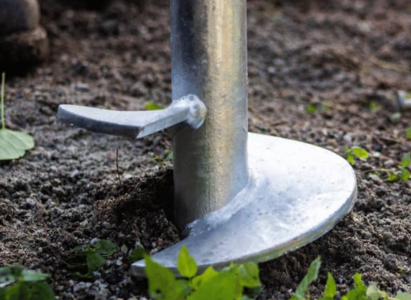
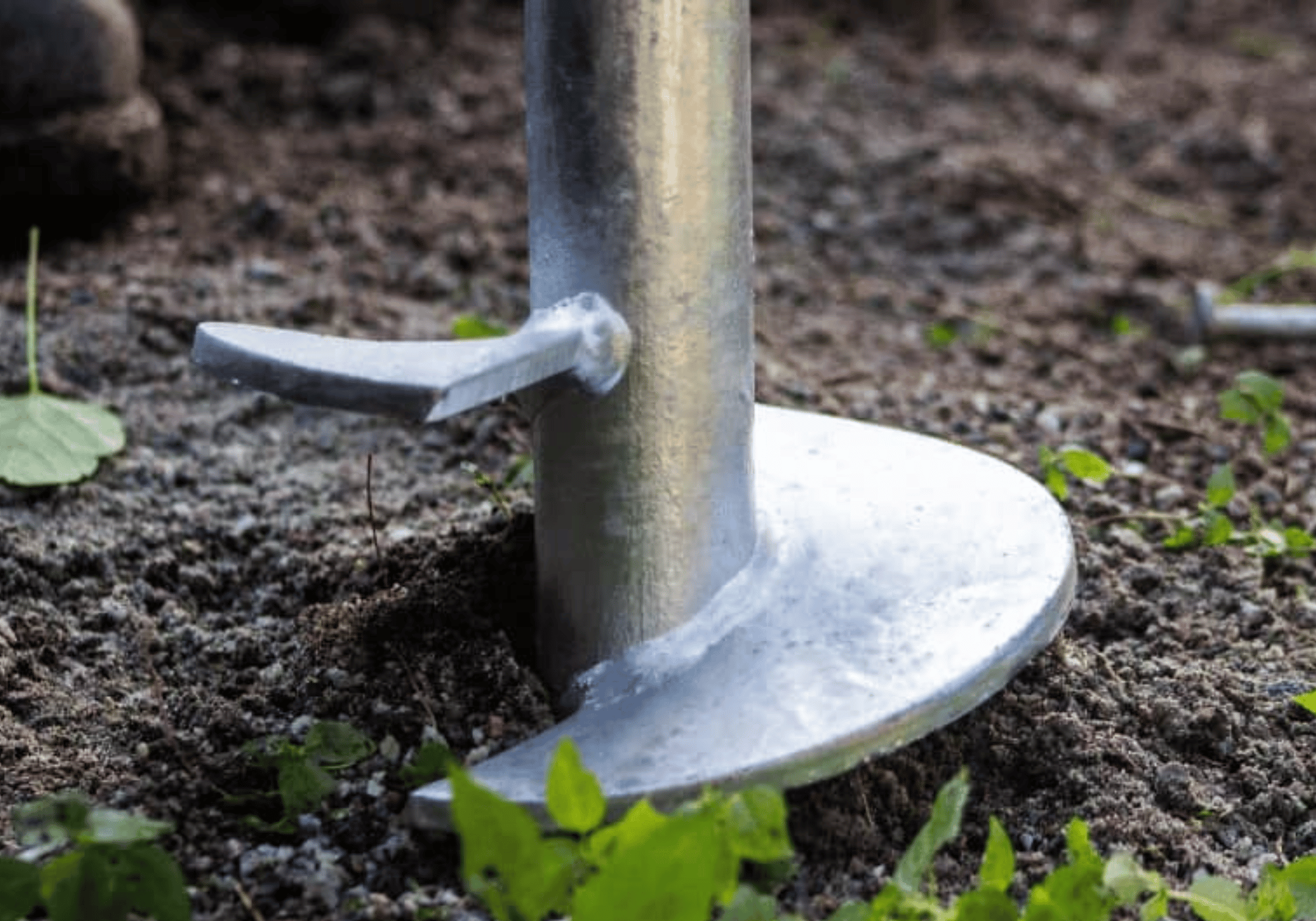
Screw piles — also called helical piles, helical piers, or screw anchors — are steel shafts with one or more helical plates (essentially large screw blades) welded onto them. A hydraulic drive head, mounted on an excavator or skid steer, rotates the shaft into the ground until it reaches the required depth and resistance. No concrete, no excavation, no curing time.
The concept is old. British engineer Alexander Mitchell patented the first screw pile in 1833, using them to support lighthouses in unstable seabed conditions. Modern versions are engineered with high-strength steel and designed using geotechnical data, load calculations, and site-specific soil assessments.
Each pile works in two ways: the helical plates bear against the soil in compression (carrying vertical loads downward), and the shaft develops skin friction along its length. Together, these mechanisms allow a properly engineered screw pile to carry substantial loads — often 50 to 200+ kips (kilonewtons) depending on the pile diameter, helix configuration, and soil conditions.
This is where homeowners often get confused. You can't just pick a pile size out of a catalog and call it a day. Proper screw pile engineering involves several steps.
Geotechnical Investigation
Before any pile is designed, an engineer needs to understand what's in the ground. This typically involves a soil boring or cone penetration test (CPT), which tells the engineer the soil stratigraphy — what layers exist, how deep they go, and their strength characteristics. In some residential projects, engineers rely on existing regional data or previous borings nearby, but a site-specific investigation is always more reliable.
Soil conditions dramatically affect pile performance. Dense sand and gravel are excellent for screw piles. Stiff clay is workable. Loose fill, organic soils (peat), or very soft clay can be problematic — not necessarily disqualifying, but they require deeper piles or larger helix configurations, which increases cost.
Load Calculations
The structural engineer calculates the loads each pile must carry — dead loads (the weight of the structure itself), live loads (occupants, furniture, snow), wind loads, and seismic loads where applicable. These are divided by the number of piles in the foundation system, accounting for load distribution from beams and grade beams above.
Pile Sizing and Helix Configuration
With soil data and load requirements in hand, the engineer selects the shaft diameter (commonly 2-7/8", 3-1/2", or 4-1/2" for residential work), the helix diameter (typically 8" to 14"), the number of helices, and the required installation depth. The goal is to reach competent bearing soil below the frost line and achieve the target installation torque.
Torque Correlation
Here's a key piece of screw pile engineering that homeowners rarely hear about: there's a well-established correlation between the torque required to install a helical pile and its actual load capacity. As the pile is installed, the drill rig's hydraulic system measures torque in real time. When the pile reaches the required torque value (specified by the engineer), the installer knows the pile has achieved its design capacity. This is one reason screw piles are considered more verifiable than poured concrete footings — you get direct, real-time confirmation of capacity during installation.
Engineer of Record
For any project requiring a building permit, a Professional Engineer (P.Eng. in Canada, P.E. in the United States) must stamp the foundation drawings. This isn't just paperwork — the engineer is legally accountable for the design, and their involvement ensures the piles are designed to applicable codes such as the National Building Code of Canada or local jurisdiction requirements.
Screw piles shine in several common residential scenarios:
Decks and Additions
This is probably the most common residential application. A backyard deck supported on screw piles can be installed in a few hours, with no concrete trucks, no formwork, and no waiting for cure. The piles extend below the frost line, virtually eliminating frost heave — a chronic problem with surface-level deck blocks and improperly installed concrete piers.
Tight or Restricted Access Sites
When an excavator can't fit, screw piles often can. The installation equipment is compact and can work in tight spaces — beside an existing structure, in a narrow side yard, or on a steep slope. Some contractors use walk-behind units for very confined areas.
Poor Surface Soils
If the upper soil layers are weak, disturbed fill, or organic material, screw piles bypass them entirely and anchor into competent bearing soil below. This is far more reliable than a shallow concrete footing sitting on questionable ground.
Environmentally Sensitive Areas
Near water, wetlands, or environmentally protected zones, screw piles minimize disturbance. No spoils are removed from the ground, no concrete is mixed on site, and the installation footprint is small. Regulators often prefer them in sensitive areas for exactly this reason.
Cold-Weather Construction
Concrete has a narrow temperature window for proper curing. Screw piles can be installed year-round, including in frozen ground (with the right equipment). For homeowners who want to get a project moving in winter, this is a genuine advantage.
Modular and Manufactured Homes
Setting a manufactured home or modular structure on screw piles is increasingly common. The piles are installed to precise elevations, the home is placed, and adjustments can be made post-installation if any settling occurs — something impossible with poured concrete.
Honest engineers will tell you that screw piles aren't universal.
Highly Variable or Rocky Soil
Screw piles cannot penetrate bedrock or large boulders. If your site has shallow bedrock or a lot of cobbles, the piles may refuse early (before reaching required depth), or installation may be impossible. A geotechnical assessment beforehand is critical — discovering this problem during installation is expensive.
Very Heavily Loaded Structures
For large homes, multi-storey additions, or structures with very high point loads, screw piles can still work — but the required pile diameters and quantities may make them cost-competitive with conventional concrete only when other factors (access, speed, frost depth) tip the balance. Each situation needs evaluation.
Some Lateral Load Applications
Screw piles are primarily designed for axial (vertical) loads. They can resist lateral loads, but less efficiently. Retaining walls, certain cantilever structures, and applications with high horizontal forces may require different solutions or supplemental engineering.
Once your engineer has designed the foundation system, a screw pile contractor handles installation. Here's a typical sequence for a residential project:
For a standard residential deck (8-12 piles), the entire installation typically takes four to eight hours. Larger projects take longer, but screw pile installation is almost always faster than formwork and concrete.
Screw pile costs vary by region, pile specification, and project complexity, but some general benchmarks:
For residential work in Canada and the northern US, expect to pay roughly $250 to $600+ per pile installed, including materials and labour. Larger diameter piles, deeper installations, and difficult access sites push costs higher. Engineering fees — separate from installation — typically run $1,500 to $5,000 for a residential foundation design, depending on complexity and the engineer's scope.
For a typical deck project using 8-10 piles, total installed cost (piles only, not the deck framing) often lands in the $3,000 to $7,000 range. That may seem like more than concrete tube footings poured by a handyman, but the comparison needs to include the cost of excavation equipment, concrete materials, labour, and the inspection risk of improperly installed footings — screw piles, when engineered correctly, are far more reliable.
Before signing anything, homeowners should ask:
To the engineer: Is a geotechnical investigation needed for my site? What torque will you specify, and how will it be verified during installation? Will you review the installation records before stamping off on the foundation?
To the contractor: Are you certified by a recognized industry organization (the Helical Piles World Association or similar)? Can you provide installation logs from a recent comparable project? What happens if a pile refuses before reaching the required depth?
A good contractor will welcome these questions. Be cautious of anyone who dismisses engineering involvement as unnecessary for a "simple" project — no foundation is simple when it's holding up a structure you're going to use for decades.
In most Canadian provinces and US states, any structural foundation — including screw piles — requires a building permit if the project exceeds certain thresholds (a detached deck under a certain square footage may be exempt, but check your local municipality). The permit requires stamped engineering drawings, and an inspector will typically verify that piles were installed per the approved design.
Don't skip this step. Unpermitted foundations can create problems when you sell your home, and worse, they may be unsafe. Municipal requirements exist for good reasons, and screw pile engineering done properly gives you a paper trail that protects you.
For Canadian homeowners especially, frost heave is worth understanding. When water in soil freezes, it expands — and that expansion exerts enormous upward force on anything embedded in the ground. Shallow footings that don't reach below the frost line can heave, settling unevenly when the ground thaws. Over years, this destroys decks, cracks foundations, and creates trip hazards.
Screw piles, when designed to extend below the local frost depth (which varies from about 4 feet in southern Ontario to 8+ feet in northern Alberta), are effectively immune to frost heave. The helices are in unfrozen soil, and any frozen soil attempting to grip the shaft moves with the freeze-thaw cycle without transferring significant force to the pile. This is one of the strongest arguments for screw piles over improperly installed concrete piers in cold climates.
Screw pile engineering has come a long way from 19th-century lighthouses. For homeowners, they represent a fast, reliable, and increasingly cost-competitive foundation option — particularly for decks, additions, and projects on challenging sites. But "fast" doesn't mean "casual." The engineering matters, the installation records matter, and the permits matter.
If you're planning a project that will rest on screw piles, start by finding a licensed geotechnical or structural engineer in your area who has specific experience with helical foundations. Ask for referrals, check credentials, and don't let anyone cut corners on the design phase. The piles themselves go in quickly. Getting the engineering right first is what makes them last.
Have questions about foundation options for your project? A licensed structural or geotechnical engineer in your region is the right starting point — especially if your site has unusual soil conditions, restricted access, or a structure that will carry significant loads.

.svg)
.svg)
.svg)
.svg)

.svg)

.svg)


.svg)