
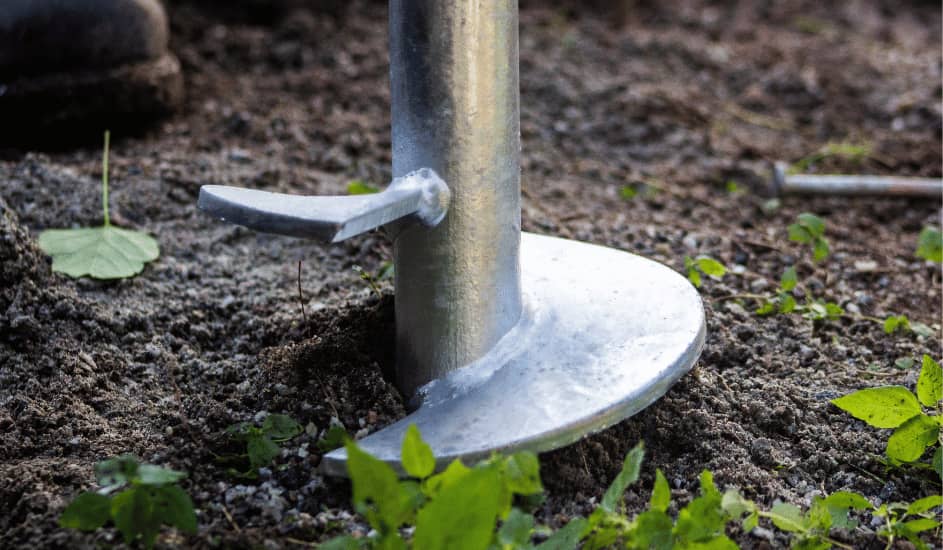



Yes, screw piles can be installed in BC’s rocky or mountainous terrain in many cases, but success depends on rock depth, fracture patterns, site access, and proper installation techniques. With the right equipment and experience, screw piles are often one of the most effective foundation solutions for challenging BC landscapes.
At Screw Pile Installers, we work across British Columbia on coastal, interior, and mountain projects where soil conditions are anything but simple. Rocky ground does not automatically rule out screw piles. In fact, when evaluated correctly, it can sometimes improve foundation performance.
British Columbia is one of the most geologically diverse regions in Canada. From coastal bedrock to interior mountain ranges, ground conditions change dramatically over short distances.
Common terrain conditions include:
Each of these conditions affects how screw piles behave during installation and how they are designed.
Screw piles are engineered to advance through soil using helical plates that cut and displace material. When installed in rocky or mountainous terrain, performance depends on whether the rock is continuous bedrock or fractured and weathered.
In fractured rock or dense gravel, screw piles can often advance successfully and achieve excellent load capacity. In solid bedrock close to grade, installation strategies may change, but screw piles are still often viable.
Rock is not a single condition. Understanding its structure is what determines feasibility.
Screw piles are not designed to drill through solid, unfractured bedrock. However, many BC sites that appear rocky actually consist of fractured rock or shallow bedrock overlain by dense soils.
When bedrock is encountered, common solutions include:
These approaches allow screw piles to perform exceptionally well even when bedrock is present.
Steep terrain is common in BC, particularly in coastal and interior mountain regions. Traditional concrete foundations often struggle in these environments due to excavation challenges and slope instability.
Screw piles offer several advantages on steep or mountainous sites:
When designed properly, screw piles are often the preferred solution for hillside construction.
Rocky terrain requires careful evaluation before installation begins. Visual inspection alone is not enough.
Professional site assessment may include:
This process ensures the foundation design matches actual ground conditions, not assumptions.
Installing screw piles in rocky terrain requires specialized equipment with sufficient torque and control. Undersized machines often fail when encountering dense material or rock.
Professional installers use:
This equipment allows piles to advance through challenging soils while maintaining alignment and capacity.
BC’s coastal regions often feature shallow bedrock with dense marine soils above. Interior mountain regions may include glacial till, fractured rock, and steep elevation changes.
In coastal environments, screw piles are commonly installed to bedrock and seated for high capacity. In interior regions, piles often advance deeper into dense soils before encountering rock.
Experience across both regions is essential. What works on Vancouver Island may not apply in the Kootenays or Okanagan.
One advantage of rocky or dense ground is increased load capacity. When piles are seated in competent rock or dense material, they can support significant loads with minimal settlement.
This makes screw piles ideal for:
Proper design ensures loads are transferred efficiently into stable ground.
While screw piles are versatile, there are situations where alternatives may be required.
These include:
In these cases, alternative foundation strategies or modified pile solutions may be recommended.
Concrete foundations in rocky areas often require blasting, heavy excavation, and extensive site disruption. This increases cost, timelines, and environmental impact.
Screw piles offer:
For many BC projects, this makes screw piles the more practical and economical choice.
BC’s mountainous regions experience freeze thaw cycles, heavy rainfall, and seismic activity. Foundations must perform under all conditions.
Properly installed screw piles offer:
These benefits are especially important in remote or hard to access locations.
Yes, in many cases they can. Success depends on rock depth, fracture patterns, and proper installation methods.
They can be seated on bedrock or installed using pre drilled pilot holes depending on site conditions.
Yes. Screw piles are commonly used on steep or uneven terrain due to minimal excavation and adjustable heights.
Installation strategies may change, including pile seating, pre drilling, or design adjustments.
Costs vary, but screw piles often remain more economical than concrete foundations that require blasting or heavy excavation.
Torque monitoring and depth verification during installation confirm load capacity and stability.
Rocky and mountainous terrain leaves little room for error. Proper evaluation, equipment, and expertise are critical.
At Screw Pile Installers, we have installed foundations across British Columbia’s most challenging landscapes. Our team understands how to adapt designs and installation methods to real world conditions.
So, can screw piles be installed in BC’s rocky or mountainous terrain? In many cases, yes, and often with excellent results. The key is professional assessment, correct equipment, and experienced installation.
If you are planning a project in challenging BC terrain, screw piles may offer the stability, speed, and long term performance you need.
Call Us For A Quote: (855) 918-7453
Screw Pile Installers is the leading helical screw pile foundation installer in British Columbia and Alberta, trusted for residential and commercial projects in even the most demanding ground conditions.

.svg)
.svg)
.svg)
.svg)

.svg)

.svg)


.svg)