
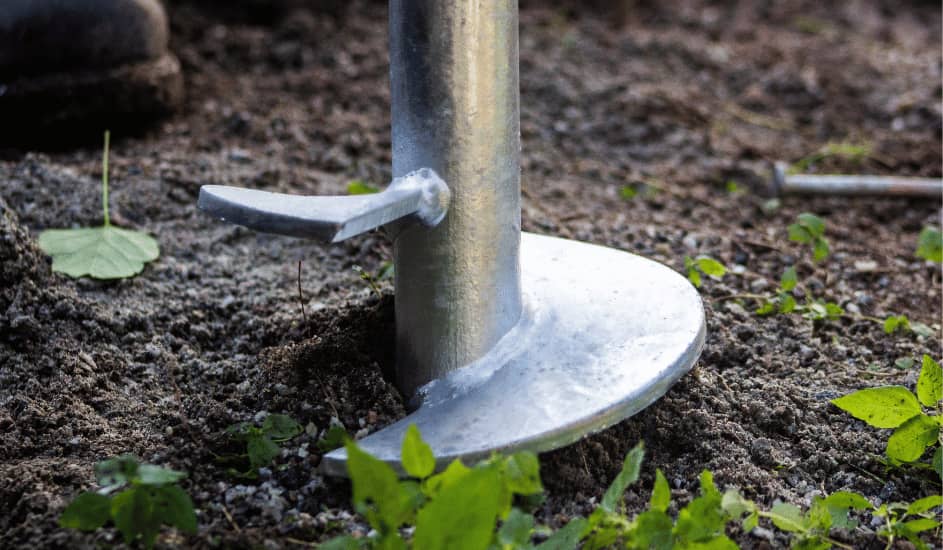



In Alberta, screw piles must be installed below the frost line and into stable, undisturbed soil to prevent frost heave. In most regions, that means depths ranging from 10 to 20 feet, depending on soil conditions, load requirements, and local frost penetration. Proper depth is not optional. It is the single most important factor in long term foundation performance.
At Screw Pile Installers, this is one of the most common questions we hear from homeowners, builders, and commercial clients across Alberta. Frost protection is critical in our climate, and getting pile depth wrong can lead to shifting, cracking, and costly repairs. Below, we break down exactly how depth is determined, why Alberta is unique, and how professional screw pile installation protects your investment.
Alberta experiences deep seasonal frost penetration due to long winters, sustained sub zero temperatures, and expansive clay soils in many regions. When soil freezes, it expands. When it thaws, it contracts. This repeated cycle creates vertical movement known as frost heave.
If a foundation element like a screw pile is installed too shallow, it can be lifted by this movement. Once lifted, it rarely settles back evenly. This leads to uneven floors, cracked finishes, misaligned doors, and structural stress.
Screw piles work exceptionally well in Alberta when installed correctly because they transfer loads below the active frost zone into stable bearing soil. Depth is what makes this possible.
There is no single frost depth that applies to all of Alberta. Frost penetration varies based on:
In general, Alberta frost depths range from approximately 6 feet in southern regions to more than 10 feet in northern and high elevation areas. However, installing screw piles only to the frost depth is not enough.
For true frost protection, screw piles must extend well below the frost zone and be anchored into competent soil that is unaffected by seasonal freeze thaw cycles.
While every project is different, most properly installed screw piles in Alberta fall within these ranges:
Depth is verified during installation by monitoring torque resistance. Torque is a direct indicator of soil strength and bearing capacity. When the pile reaches required torque at the correct depth, it confirms the pile is properly anchored.
This is why screw pile depth should never be guessed or standardized. It must be measured in real time during installation.
Soil composition plays a major role in determining how deep screw piles need to go. Alberta soils vary significantly even within the same city.
Common soil types include:
Expansive clays, which are common in Calgary and Edmonton, are particularly sensitive to moisture and freezing. Screw piles installed in these soils often need to go deeper to reach stable bearing layers.
In areas with loose or disturbed fill, piles may need to extend significantly deeper until undisturbed native soil is reached.
Building codes provide minimum standards, not optimal solutions. While Alberta building codes reference frost protection requirements, they do not account for site specific soil conditions or load demands.
A screw pile installation that technically meets code but does not reach adequate bearing soil can still fail over time.
At Screw Pile Installers, we go beyond minimum requirements. We design pile depth based on:
This approach ensures foundations remain stable decades into the future, not just during initial inspections.
One of the biggest advantages of screw piles over concrete footings is real time verification. As each pile is installed, torque readings are monitored continuously.
Higher torque indicates stronger soil. When target torque is achieved at depth, it confirms the pile has sufficient capacity and is anchored below frost susceptible layers.
If torque is not achieved, the pile is advanced deeper. This eliminates guesswork and ensures every pile performs as designed.
This process is why professional installation matters. Without torque monitoring, there is no reliable way to confirm proper depth.
Different regions of Alberta present different challenges:
Experience in these regions matters. A one size fits all depth approach simply does not work in Alberta.
For residential projects like decks, porches, sunrooms, and home additions, frost protection is often overlooked. Shallow foundations may seem adequate initially but fail after several freeze thaw cycles.
Properly installed screw piles prevent:
Homeowners choose screw piles because they provide immediate load capacity, year round installation, and long term stability when installed to proper depth.
Commercial projects require even greater attention to depth. Higher loads mean piles must reach stronger soil layers and achieve higher torque values.
Warehouses, modular buildings, signage foundations, and multi unit structures often require deeper installations to ensure:
Depth is engineered, verified, and documented for these applications.
It is important to understand that pile length and installed depth are not the same thing. Piles are manufactured in sections and extended as needed during installation.
This modular approach allows installers to adapt in real time based on soil conditions. If competent soil is deeper than expected, additional extensions are added until proper depth and torque are achieved.
This flexibility is a major advantage over traditional concrete foundations.
Some of the most common issues we see include:
These mistakes can compromise even the best designed projects. Frost protection is not just about depth. It is about correct installation practices.
Concrete footings rely on mass and depth to resist frost. They must be excavated below frost depth, formed, poured, and cured. In Alberta winters, this process is slow and expensive.
Screw piles offer:
For many projects, screw piles are the most reliable frost protection solution available.
In most cases, screw piles must extend well below the frost line and into stable soil. This typically means 10 to 20 feet, depending on location and soil conditions.
No. Frost depth varies by region, soil type, and moisture content. Northern and exposed areas generally experience deeper frost penetration.
Yes. Screw piles can be installed year round, including winter, because they do not rely on curing or open excavation.
Shallow piles are susceptible to frost heave, which can cause lifting, tilting, and long term structural damage.
Many projects benefit from engineering review, especially commercial or structural applications. Torque data is often used to confirm design assumptions.
Proper depth is confirmed by achieving target torque values at depth, which indicates adequate soil bearing capacity below the frost zone.
Screw piles are only as effective as their installation. Depth, torque, alignment, and pile selection all matter.
At Screw Pile Installers, we bring extensive experience across Alberta and British Columbia. Our team understands local soil conditions, frost behavior, and structural requirements. Every pile is installed with precision, verified in real time, and built for long term performance.
Understanding how deep screw piles need to go in Alberta for frost protection is essential for any successful foundation project. Proper depth protects against frost heave, ensures structural stability, and prevents costly future repairs.
There is no shortcut and no universal depth that works everywhere. The right solution comes from experience, real time verification, and professional installation.
Call Us For A Quote: (855) 918-7453
Screw Pile Installers is the leading helical screw pile foundation installer in British Columbia and Alberta, trusted for residential and commercial projects that demand long term stability and frost protection.

.svg)
.svg)
.svg)
.svg)

.svg)

.svg)


.svg)