AboutBecome a DealerFAQContact

Screw Pile Foundations For Retaining Walls & Slope Stabilization

Retaining walls and slope stabilization systems must withstand constant soil pressure, water forces, and long term ground movement. At Screw Pile Installers, we design and install helical pile foundations and tieback systems that deliver reliable support for retaining walls, embankments, and unstable slopes in residential, commercial, and industrial environments.
Whether you’re building on clay, sand, slopes, or frost-prone terrain, our screw piles provide unmatched stability and faster installation
than traditional concrete footings.

Engineered Solutions for Soil Retention & Slope Control

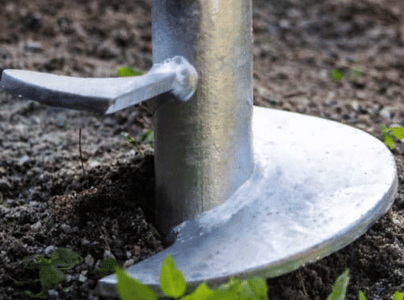
Traditional retaining wall foundations often struggle in weak soils, confined spaces, or sloped terrain. Helical piles offer a proven alternative that transfers loads deep into stable soil layers, reducing the risk of rotation, settlement, or wall failure.
Whether supporting new construction or reinforcing an existing structure, our systems are designed to manage lateral earth pressures and long term ground movement with confidence.
WHY CHOOSE US

Why Helical Piles Are Ideal for Retaining Walls & Slopes

From small retaining walls to large scale slope stabilization projects, helical pile systems provide reliable ground control with reduced construction risk.
High Lateral Load Resistance
Engineered to resist soil pressure and prevent wall movement or overturning.
Effective in Poor Soils
Ideal for clay, fill, loose soils, and areas with high groundwater.
Minimal Excavation
Perfect for tight access sites, property boundaries, and built up areas.
Fast Installation
Install foundations quickly without concrete curing delays.
All Season Capability
Install year round, even in frozen or saturated ground conditions.
Long Term Stability
Galvanized steel piles resist corrosion and settlement for decades of performance.
Our Process

Our Retaining Wall & Slope Stabilization Process

We follow an engineering driven approach to ensure every system performs as designed under real world conditions.
[01]
Site Assessment & Engineering Review
We review soil reports, slope geometry, drainage conditions, and load requirements to design the appropriate pile layout and depth.
[03]
Helical Pile Installation
Using hydraulic drive equipment, piles are installed to engineered depth and verified torque values, confirming required capacity on site.
[05]
Wall or Anchor Integration
Piles are connected to retaining wall systems, grade beams, or tieback anchors to create a stable and secure structure.
[02]
Layout & Alignment Planning
Pile locations are precisely marked to align with wall panels, soldier piles, lagging systems, or tieback anchor points.
[04]
Verification & Documentation
Torque data and load results are documented and provided for engineering review and inspections.
[06]
Final Inspection & Site Readiness
A full inspection is completed and the site is left clean, stable, and ready for backfill or finishing work.
Comparison

Helical Piles vs. Conventional Retaining Wall Foundations

Feature
Installation speed
Excavation required
Performance in weak soils
Lateral load resistance
Weather dependency
Long term settlement risk
Helical Piles
Same day
Minimal
Excellent
High
Low
Low
Concrete Foundations
Multiple days
Extensive
Variable
Moderate
High
Moderate to high

8%

Concrete contributes 
to global CO₂

75-100

Years lifespan 
(Screw Piles)

30-50

Years before major repairs (Concrete)

100%

Reusable & recyclable (Screw Piles)

Same Day

Ready to build 
(Screw Piles)

Common Applications

Commercial and residential retaining walls
Hillside and slope stabilization
Roadway and access embankments
Property line and boundary walls
Infrastructure and utility corridors
Wall repairs and reinforcements
Landslide mitigation projects
FAQ

Frequently Asked Questions

Yes. Helical piles are engineered to support significant lateral loads and are suitable for both short and tall retaining wall systems.
Absolutely. Helical piles and anchors are widely used to stabilize slopes by transferring loads into deeper, stable soil layers.
Yes. Compact installation equipment allows work in confined areas with limited access.
With proper galvanization and installation, helical piles commonly exceed 75 years of service life.
While pricing varies by site conditions, helical piles often reduce total project costs by minimizing excavation, speeding installation, and lowering long term maintenance risks.

Ready To Build Your New Screw Pile Foundation?

From sandy lakeshores to rocky slopes, wetlands to frozen ground screw piles deliver unmatched stability, no matter the conditions.
© 2025 Screwpile. All Rights Reserved