
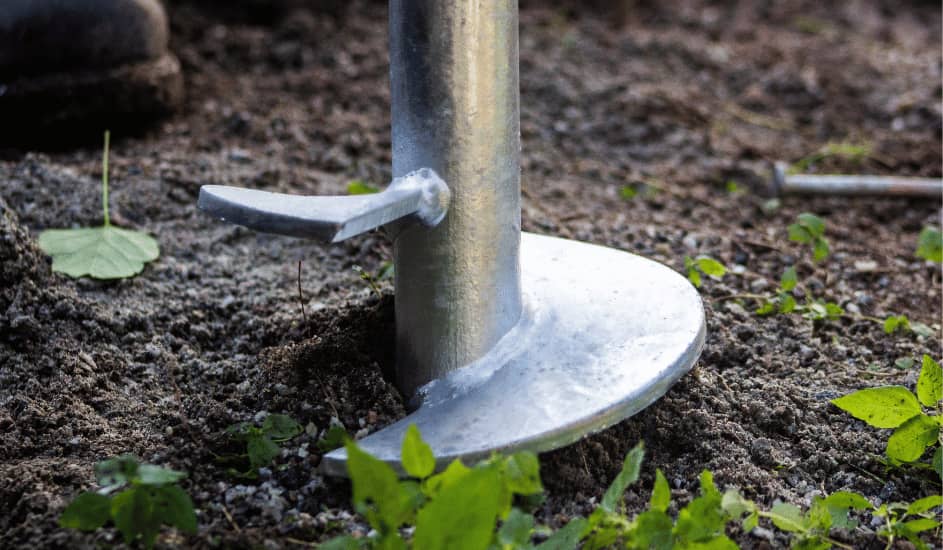



Yes, screw piles are one of the most effective foundation solutions for BC’s coastal rain and wet soil conditions when properly designed and installed. They perform exceptionally well in saturated ground by transferring structural loads to stable soil layers while minimizing drainage disruption and long term settlement risks.
At Screw Pile Installers, we work extensively throughout coastal British Columbia where rainfall, high water tables, and soft soils are part of everyday construction. Wet ground does not have to mean compromised foundations. In many cases, it makes screw piles the smartest choice available.
British Columbia’s coastal regions experience some of the highest annual rainfall levels in Canada. Combined with mild temperatures and dense vegetation, this creates persistently wet soil conditions throughout much of the year.
Common coastal soil characteristics include:
These conditions can be extremely challenging for traditional concrete foundations, especially shallow footings and slab on grade construction.
Concrete foundations rely on dry excavation, formwork stability, and curing conditions. In coastal BC, achieving these conditions is often difficult.
Wet soils can cause:
Waterlogged soils also reduce bearing capacity, meaning footings may sink or shift after construction is complete.
Screw piles are installed by rotating steel shafts with helical plates into the ground. Rather than displacing large volumes of soil, they advance through it with minimal disturbance.
In wet soils, this offers several advantages:
Because screw piles transfer loads to deeper, more competent soil layers, surface saturation has far less impact on performance.
One of the most overlooked benefits of screw piles in coastal environments is drainage. Traditional foundations can act as barriers that trap water against structures.
Screw piles allow water to move naturally through the soil profile. This reduces:
For elevated structures like decks, homes, and cottages, this improved drainage can significantly extend the lifespan of the building.
Many coastal BC sites have groundwater close to the surface year round. Excavating below the water table for concrete foundations often requires dewatering, which is costly and disruptive.
Screw piles eliminate this problem entirely. They can be installed through saturated soil without pumping, trenching, or waiting for dry conditions.
This makes them ideal for:
Salt air, moisture, and acidic soils can raise concerns about steel corrosion. Modern screw piles are engineered to perform in these conditions.
Corrosion protection strategies include:
When properly specified, screw piles offer decades of service life even in aggressive coastal environments.
British Columbia’s coast is also a high seismic zone. Foundations must accommodate both vertical loads and lateral movement.
Screw piles perform exceptionally well in seismic conditions because:
This combination makes them well suited for coastal structures where seismic and soil conditions intersect.
Many coastal sites are environmentally sensitive, with protected vegetation, shorelines, and ecosystems.
Screw piles offer a low impact foundation solution by:
This is particularly important for projects near shorelines, wetlands, and forested coastal lots.
Homeowners across coastal British Columbia choose screw piles for:
In wet soil conditions, screw piles provide predictable performance and faster project timelines compared to concrete.
Commercial structures near the coast face even greater exposure to moisture and soil instability.
Screw piles are commonly used for:
Their ability to perform in saturated soils makes them a reliable option for coastal development.
One of the biggest challenges in coastal BC construction is weather delays. Rain can halt excavation and concrete work for weeks.
Screw piles can be installed:
This flexibility keeps projects moving and reduces costly downtime.
While screw piles excel in wet soils, they are not ideal for every situation.
Potential limitations include:
A professional site evaluation determines the best foundation approach.
In wet coastal soils, concrete foundations often require:
Screw piles typically offer:
For many coastal projects, this makes screw piles the preferred solution.
Structures built on screw piles benefit from:
When installed correctly, screw piles provide stable support for decades in coastal environments.
Yes. Screw piles perform extremely well in wet and saturated soils by transferring loads to deeper, stable layers.
Yes. Installation is not affected by rainfall because no open excavation or curing is required.
Not when piles are installed to proper depth and torque. Load capacity is verified during installation.
Properly specified galvanization and material thickness protect piles from corrosion in coastal environments.
Yes. They are commonly used near water due to minimal disturbance and strong performance in saturated ground.
Yes. Their flexibility and deep anchoring make them highly effective in seismic regions like coastal BC.
Coastal foundations require a deep understanding of soil behavior, drainage, and corrosion exposure. Proper design and installation make the difference between long term stability and ongoing problems.
At Screw Pile Installers, we bring hands on experience from projects across coastal British Columbia and Alberta. Our team understands how to design and install screw pile foundations that perform in the most challenging wet soil conditions.
So, are screw piles a good foundation option for BC’s coastal rain and wet soils? In most cases, they are one of the best options available. Their ability to install in saturated ground, manage drainage, and provide long term stability makes them ideal for coastal construction.
If you are building in a wet or high rainfall area, screw piles deserve serious consideration.
Call Us For A Quote: (855) 918-7453
Screw Pile Installers is the leading helical screw pile foundation installer in British Columbia and Alberta, trusted for residential and commercial projects in coastal and wet soil environments.

.svg)
.svg)
.svg)
.svg)

.svg)

.svg)


.svg)