
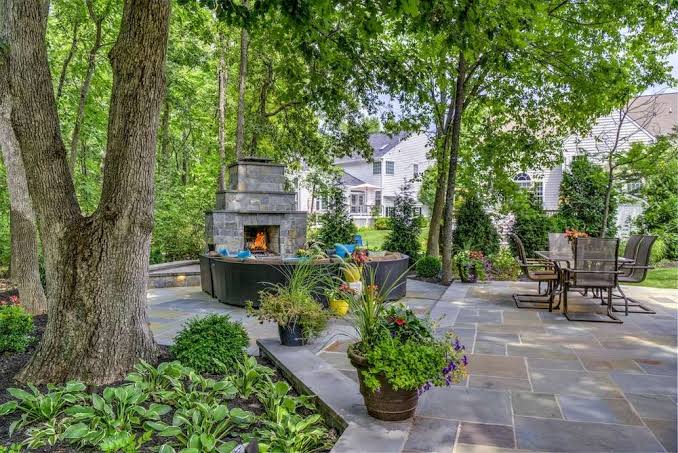


Screw piles can often be installed near existing trees, but the location, size, species, and condition of the tree must be considered before installation begins.
Tree roots can interfere with pile placement, equipment access, excavation, and the long-term stability of both the tree and the proposed structure. Installing screw piles too close to a mature tree may damage important roots, reduce the tree’s stability, or make it difficult to achieve the required pile depth and capacity.
At the same time, screw piles may be a practical foundation option near trees because they usually require less excavation and soil disturbance than conventional concrete footings.
The success of the installation depends on proper site planning, structural design, arboricultural guidance, and careful placement of the piles.
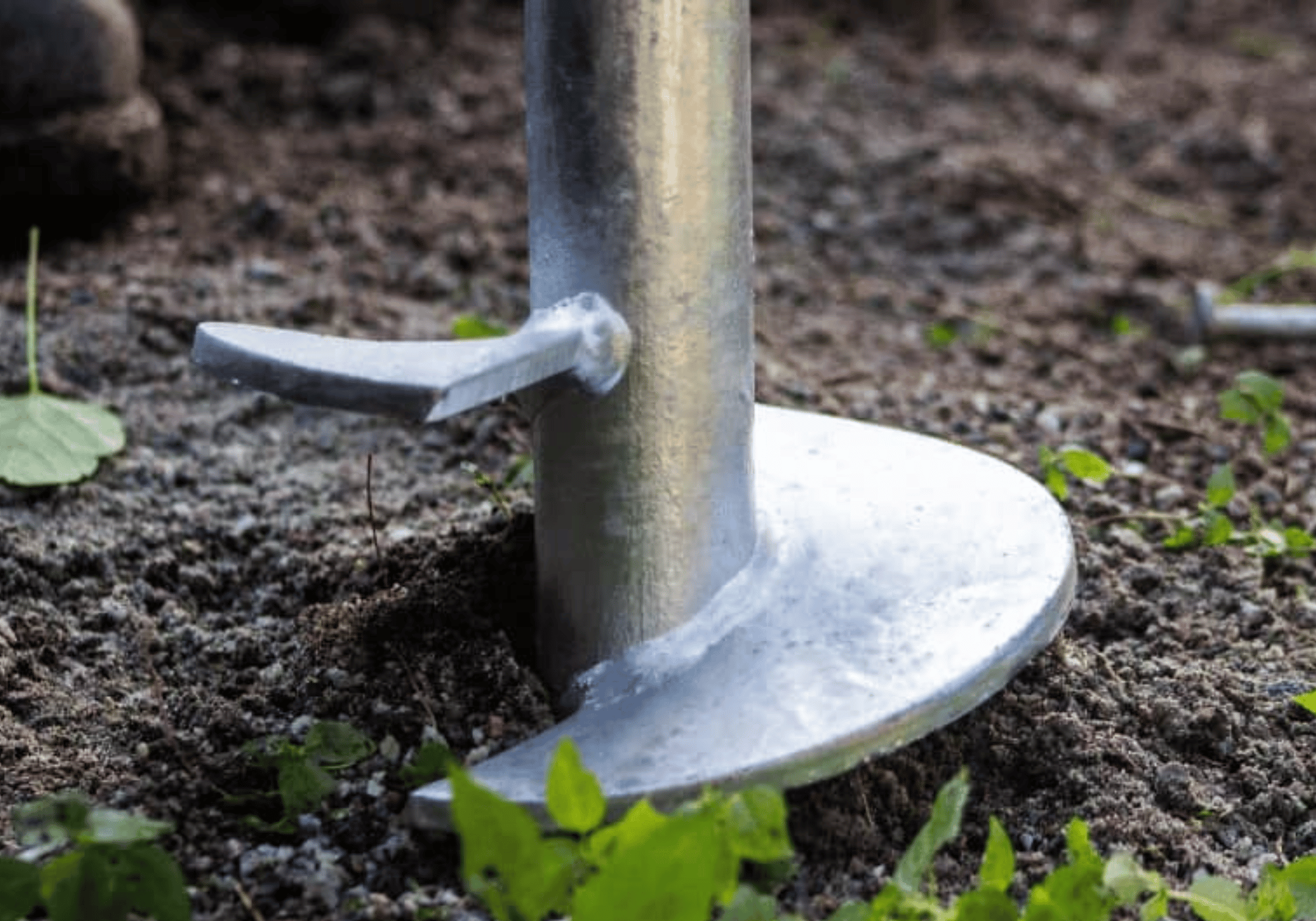
Screw piles are steel foundation elements that are installed into the ground by rotating them into the soil.
A typical screw pile includes:
The helical plates allow the pile to advance into the soil while also providing bearing capacity.
Screw piles are commonly used to support:
They can be installed with relatively compact equipment and often create less excavated soil than traditional foundation systems.
Traditional concrete foundations can require large excavations, formwork, soil removal, and access for construction equipment.
Screw piles typically have a smaller installation footprint.
Potential advantages near trees include:
These advantages do not mean screw piles can be installed anywhere without affecting the tree. Roots may still be damaged by the pile shaft, helical plates, installation equipment, or site access.
There is no single distance that applies to every project.
The required separation depends on:
Large, mature trees usually require more consideration than small ornamental trees.
The visible canopy is not always a reliable indication of where important roots are located. Roots can extend well beyond the trunk and may spread beyond the edge of the branches.
A qualified arborist can help identify the likely root protection area and recommend where construction activity should be restricted.
A tree protection zone is an area around a tree that should be protected during construction.
The zone may be based on:
Activities within this zone may be restricted or require special procedures.
Restrictions may apply to:
The tree protection zone should be identified before the foundation layout is finalized.
Yes. Screw piles can damage roots if installed within the tree’s root system.
During installation, the pile shaft and helical plates rotate through the soil. This can:
The severity of the damage depends on the root size, location, and importance to the tree.
Cutting a few small roots may have limited impact. Damaging a major structural root close to the trunk can affect the tree’s health and stability.
Large roots near the trunk help anchor the tree.
These roots are particularly important because they resist wind loads and prevent the tree from overturning.
Damage to structural roots can increase the risk of:
A tree may not show immediate symptoms after root damage. Decline or instability can appear months or years later.
This is why pile placement should not be based only on whether the installer can physically advance the pile into the soil.
The result depends on the size and position of the root.
When the pile encounters a small root, the installation may continue with limited resistance. The root may be cut or displaced.
When the pile encounters a large root, several things may happen:
The installer should not automatically force the pile through a major obstruction without understanding what has been encountered.
Where tree roots are likely, the project team should establish a procedure for stopping, reviewing, and relocating piles when necessary.
One advantage of screw piles is that the foundation layout may sometimes be adjusted to avoid sensitive areas.
Possible design changes include:
Any changes to pile placement must be reviewed by the structural engineer.
Moving a pile without engineering approval can change:
The final pile layout should satisfy both structural requirements and tree protection recommendations.
In some cases, exploratory excavation may help identify major roots before the pile locations are finalized.
This work may be completed using:
The excavation method should minimize root damage.
Mechanical digging close to a mature tree can cut roots before they are identified. Hand or air excavation is often preferred in sensitive areas.
An arborist should advise on acceptable exploration methods and root handling.
Some roots may be pruned, but root cutting should not be done without professional guidance.
The impact depends on:
Cutting a large root close to the trunk may compromise the tree’s stability.
When root pruning is considered, it should generally be performed cleanly and under the direction of an arborist. Roots should not be torn, crushed, or left with ragged damage from installation equipment.
An arborist may be appropriate when:
The arborist can assess the tree, identify the protection area, recommend acceptable pile locations, and monitor root-sensitive work.
For regulated trees, an arborist report may be required before permits are issued.
A structural engineer should design or review screw pile foundations used to support a building or structural element.
The engineer may determine:
When trees affect the proposed layout, the engineer can revise the foundation system to avoid major roots while maintaining structural performance.
The installer is responsible for installing the piles in accordance with the approved design and installation requirements.
The installer may also record:
The installer should notify the engineer when:
Tree roots should be treated as a potential site condition requiring coordination, not simply as an inconvenience during installation.
It may be possible, but installing within the drip line increases the likelihood of root interaction.
The drip line is the area beneath the outer edge of the tree canopy. Many roots may be located within and beyond this area.
Installation inside the drip line should generally involve:
The drip line alone should not be used as the only measure of the root protection area.
The screw pile itself may have a small footprint, but installation equipment can create additional damage.
Heavy equipment operating near trees can:
Soil compaction can reduce oxygen and water movement through the root zone.
Protective measures may include:
Access planning should be completed before equipment arrives on site.
Screw piles can sometimes be installed near a stump, but the remaining root system and disturbed soil must be considered.
Potential concerns include:
The pile may need to extend below the disturbed soil and root zone to reach competent bearing material.
If the stump was recently removed, the excavation should be properly backfilled and compacted where it affects the proposed structure.
Yes, screw piles can be a useful foundation option after a tree is removed because they can extend through disturbed surface soil to deeper supporting layers.
However, the design should consider:
Installing a shallow concrete pad directly over a removed stump area may create settlement problems. Screw piles can help transfer loads below this disturbed zone when properly designed.
The long-term effect depends on how much of the root system was disturbed.
Possible long-term impacts include:
Construction activity can also alter water movement around the tree.
New roofs, decks, walkways, and drainage systems may increase or reduce moisture reaching the roots. Grade changes and impermeable surfaces can further affect soil conditions.
The overall site design should consider both direct root damage and changes to the tree’s growing environment.
A leaning tree should be assessed before construction begins.
An arborist should determine whether the lean is:
Building close to a hazardous tree can expose the new structure and its occupants to unnecessary risk.
The tree may require pruning, monitoring, stabilization, or removal before the screw piles are installed.
Roots from a neighboring tree may extend into the proposed construction area.
Before cutting roots or installing piles near the property line, consider:
Tree ownership and root-cutting rules vary by location.
Legal advice may be appropriate when the proposed work could significantly affect a neighboring tree.
Permit requirements depend on the type of structure and local regulations.
Approvals may be required for:
The municipality may request:
Permit and tree protection requirements should be confirmed before construction begins.
A typical planning process may include:
Early coordination provides more flexibility than trying to solve conflicts during installation.
The proposed foundation layout may need adjustment when:
A revised layout may protect the tree and improve the constructability of the project.
Tree removal may be considered when:
Removal should not be treated as the automatic solution.
A qualified eugene tree service or arborist should assess whether the tree can be safely retained and whether removal is permitted.
Projects involving screw piles near trees may require coordination between:
A geotechnical engineer may be needed when the project involves unusual soil conditions, slopes, erosion, fill, or foundation performance concerns.
Yes, screw piles can often be installed near existing trees when the foundation is carefully designed and the tree’s root system is properly considered.
The piles should be positioned to avoid major structural roots where possible. Equipment access should be controlled to reduce soil compaction, and any pile relocation should be reviewed by the structural engineer.
An arborist should be involved when the tree is mature, protected, unstable, or likely to be affected by root disturbance.
With early planning and coordination, screw piles may provide a practical way to support a new structure while limiting disturbance to the surrounding property.
Are you planning a deck, addition, garage, porch, or other structure near an existing tree?
A structural engineer can design the screw pile foundation, coordinate pile placement around site constraints, and provide the drawings and details required for construction.
Contact our structural engineering team to discuss your project and determine whether an arborist, tree protection plan, or specialized foundation layout may be required.

.svg)
.svg)
.svg)
.svg)

.svg)

.svg)


.svg)